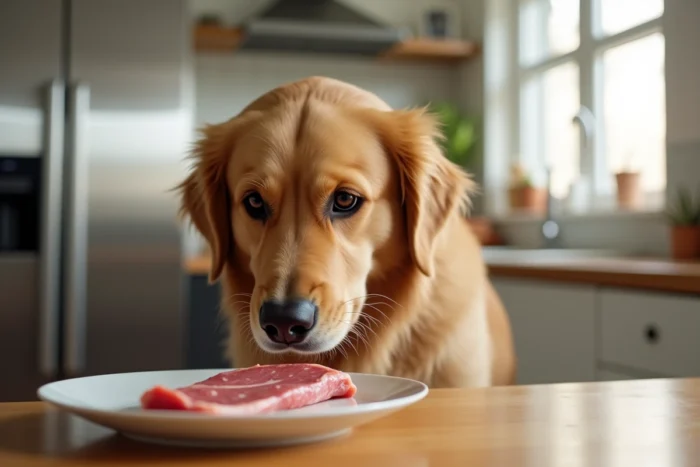
The dog has a sense of smell that is significantly more powerful than that of humans, capable of discriminating chemical signatures at extremely low concentrations. When faced with a piece of spoiled meat, this ability comes into play, but it also has limits that are rarely discussed. What do we really measure when we talk about a dog’s detection of spoiled meat, and how much does this sense of smell protect its health?
Volatile compounds of spoiled meat: what the dog perceives and what escapes it
The decomposition of meat generates specific volatile organic compounds (VOCs): cadaverine, putrescine, biogenic amines, short-chain fatty acids. The dog picks up these molecules long before a human perceives any suspicious odor.
| Type of signal | Detectable by the dog | Detectable by humans | Actual danger level |
|---|---|---|---|
| Putrefaction odor (cadaverine, putrescine) | Yes, at very low concentration | Yes, but late | Variable, often low in isolation |
| Surface mold | Yes | Yes (visual + odor) | Moderate to high depending on the strain |
| Bacterial toxins (salmonella, listeria) | No directly | No | High |
| Histamine in fish or meat | Poorly documented | No | High in sensitive dogs |
This table highlights a major gap: food can be dangerous without emitting any abnormal odor. The toxins produced by pathogenic bacteria such as salmonella or listeria do not emit characteristic VOCs. The dog’s sense of smell, as effective as it is, does not detect these invisible agents.
A piece of chicken contaminated during a break in the cold chain can remain looking and smelling normal for several hours. The dog then consumes it without hesitation, exposed to a real risk of food poisoning. This helps to better understand cases of spoiled meat in dogs on Amazing Pet Place by distinguishing between olfactory detection and actual food safety.
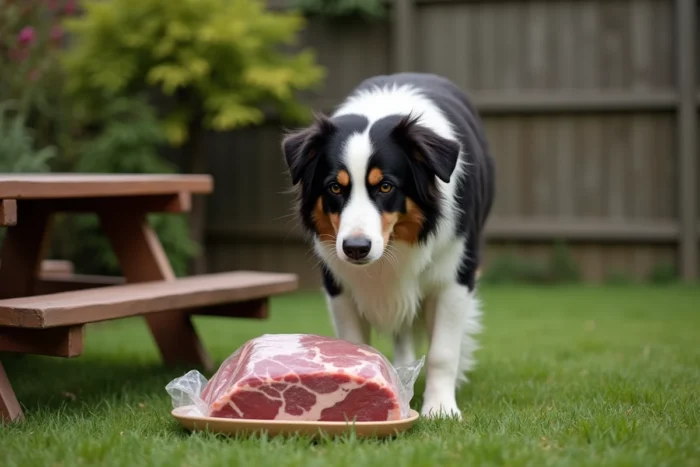
Dog’s olfactory sorting reflex in the face of spoiled food
In practice, the dog does not react to spoiled meat like a calibrated detector. Its behavior depends on several factors: the concentration of VOCs, its individual tolerance threshold, and especially its level of hunger or greed.
Some dogs sniff a suspicious food for a long time, back away, then come back to eat it anyway. Others categorically refuse it. The behavioral response varies greatly from one individual to another, with no direct correlation to breed or age.
Professional detection dogs, used in customs checks to spot prohibited animal products, illustrate this nuance well. Their effectiveness relies on specific training for a target olfactory signature, not on an innate instinct to reject. A customs dog trained to detect smuggled meat does not refuse this meat because it is dangerous: it signals an odor it has been taught to identify.
What the domestic dog actually does
The domestic dog operates on a simpler pattern. Its olfactory sorting relies on the association between a strong odor of decomposition and a past unpleasant experience (vomiting, digestive discomfort). Without this prior experience, a dog may consume highly spoiled meat.
- Dogs that have previously suffered from food poisoning often show a more pronounced aversion to putrefaction odors, a learning through negative association.
- Puppies and young dogs, without a history of discomfort, more easily accept spoiled food than experienced adults.
- Gluttonous dogs, who swallow without chewing, partly bypass the olfactory filter since their sniffing time is shortened.
Dog food poisoning: signs and severity thresholds
When the sense of smell is not enough and the dog ingests contaminated meat, the consequences vary depending on the pathogen involved and the amount consumed.
The most common signs of food poisoning in dogs include vomiting, diarrhea (sometimes bloody), lethargy, and loss of appetite. These symptoms generally appear within hours of ingestion, but some bacteria cause delayed effects.
A dog that vomits once after eating suspicious food does not always require an emergency consultation. In contrast, repeated vomiting, persistent diarrhea, or signs of dehydration (dry gums, skin fold that does not return) justify a visit to the veterinarian without delay.
Fish and histamine: a special case
Improperly stored fish accumulates histamine, a substance that neither dogs nor humans detect by smell in the early stages. In sensitive dogs, the ingestion of histamine-rich fish can cause skin reactions, severe digestive disorders, or even shock in extreme cases. Fish is the food where the dog’s sense of smell is least protective, as biochemical degradation precedes the detectable odor by a wide margin.
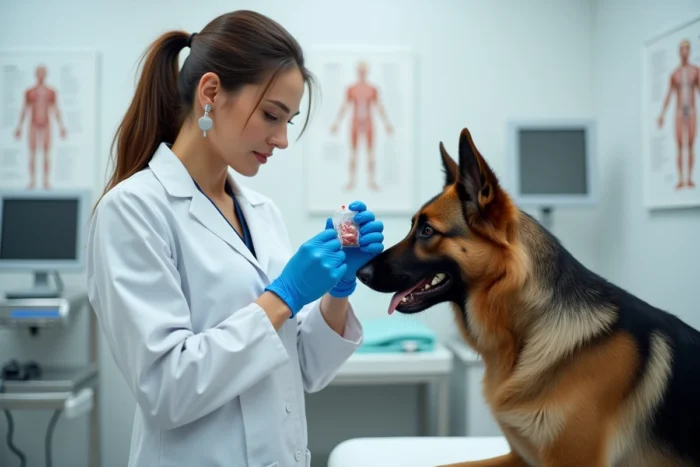
Owner-side prevention: what the dog’s sense of smell cannot replace
Relying on the dog’s sense of smell to filter risky foods is like entrusting health control to an uncalibrated tool. Prevention relies on concrete actions by the owner.
- Maintain the cold chain for any meat or fish given to the dog, including in BARF or home diets: food taken out of the refrigerator for more than two hours in warm weather should be discarded.
- Never rely solely on the appearance or smell of food to judge its safety: the most dangerous pathogens are often odorless and invisible.
- Store opened kibble and wet food in airtight containers, away from heat, to limit mold growth.
- Consult a veterinarian as soon as digestive symptoms persist beyond twenty-four hours or are accompanied by fever.
The dog’s sense of smell remains a remarkable asset for detecting advanced stages of decomposition. It does not constitute a reliable barrier against silent bacterial contamination. The responsibility for the dog’s food safety lies with the owner, not the animal’s nose.