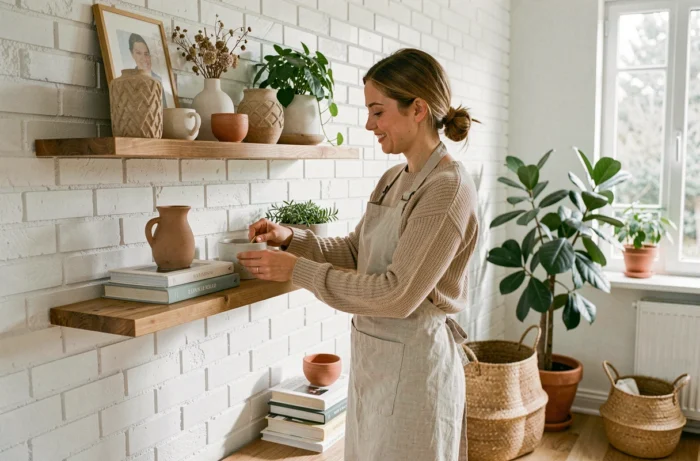
A narrow corridor blocking access to the kitchen, a living room where light stops in the middle of the room, a bedroom cluttered by a piece of furniture that is too deep: we all know these daily irritants. Arranging and decorating your home doesn’t start with choosing a paint color, but with identifying what concretely hinders the flow and use of each room.
Flow and circulation in rooms: the often overlooked starting point
Before thinking about interior decoration or color palettes, it’s beneficial to mentally trace the routes we take most often. Entry to kitchen, living room to bathroom, bedroom to dressing room. If a piece of furniture forces a detour or if a door opens the wrong way, that’s the first problem to address.
Specifically, we can clear a passage of at least 80 cm between two pieces of furniture so that two people can pass each other without contorting. In a living room, placing the sofa against the load-bearing wall often frees up a natural circulation axis towards the kitchen or the balcony.
Opinions vary on this point, but replacing a swinging door with a sliding door in a narrow corridor can transform the fluidity of a space without any heavy work. This logic of flow, borrowed from interior designers, always precedes the decorative choice. When looking to explore recommandons.fr for the home, this functional approach is found before any aesthetic considerations.
Natural and artificial light: decorating your home through lighting staging
A poorly lit room appears smaller and colder, regardless of the furniture installed. Light is the most underestimated decorating tool.
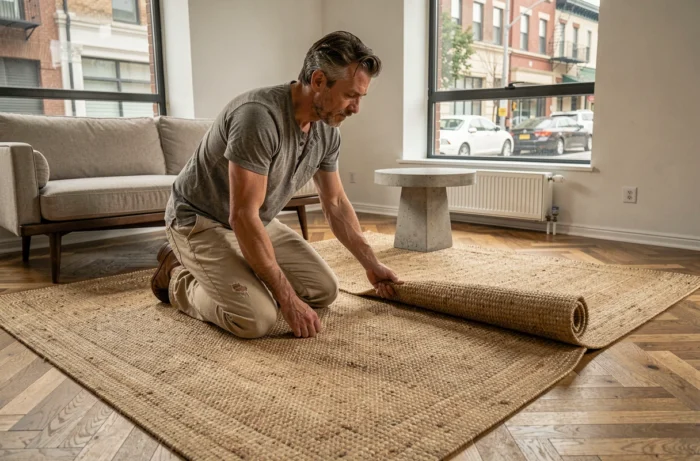
Utilizing natural light without major renovations
We start with curtains. A thick sheer that reaches the floor easily blocks a third of incoming light. Replacing it with a lighter fabric, or simply shortening an opaque curtain so that it only covers half the window, radically changes the atmosphere of the living room or bedroom.
Positioning a mirror facing the main window reflects light towards the back of the room. This is not a theoretical tip: in a north-facing room, the effect is visible within the first hour of morning sunlight.
Multiplying sources of artificial light
A single ceiling light creates marked shadow zones. It’s beneficial to distribute three types of sources in each room:
- A general lighting (ceiling light or pendant) that covers the entire space without glare
- Task lamps (reading lamp, wall sconce) placed near activity areas: sofa corner, kitchen countertop, bedside table
- A mood lighting (LED string lights behind a piece of furniture, light strip under a shelf) that softens the atmosphere in the evening
This layering avoids the “waiting room” effect of a single neon light and allows for adjusting the ambiance according to the time of day.
Colors and materials: choosing a guiding thread rather than a trend
Decor trends change quickly. Right now, we observe two currents that respond to opposing needs. The “dopamine decor” focuses on bright colors and playful patterns to stimulate energy. The warm minimalism, on the other hand, favors earthy tones, natural materials like raw wood and linen, and a visual simplicity that reduces mental overload.
Choosing between these two approaches conditions the entire coherence of your interior. Mixing the two often results in a confusing outcome. It is recommended to define a neutral base (walls, floor, large furniture) and then inject personality through textiles and accessories.
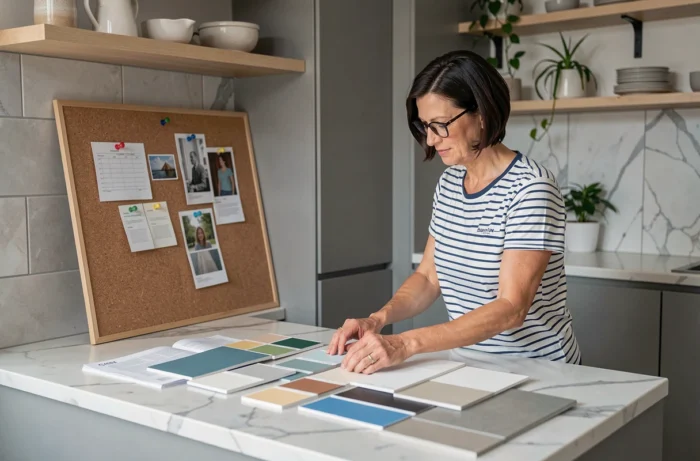
Testing color before committing
Painting an entire wall on a whim is a classic trap. Instead, apply a sample on a fifty-centimeter square, observing it at different times of the day. A shade that seems soft at noon can turn dull under artificial lighting in the evening.
For the walls of the living room or bedroom, earthy colors (terracotta, sage green, deep beige) offer good visual durability. They pair well with both light and dark wood, and adapt well to changing textiles throughout the seasons.
Furniture and storage: the double-use rule for small spaces
In an apartment or house with modestly sized rooms, every piece of furniture must justify its place. A piece of furniture that serves only one function in a small space is one too many.
An entry bench with an integrated storage compartment stores shoes while providing a seat. A lift-top coffee table serves as an auxiliary desk. A bed with built-in drawers replaces an entire dresser in a narrow bedroom.
Decluttering before furnishing
We often see interiors where the problem is not a lack of storage, but an excess of objects. Before buying a new storage piece, we sort. The most effective method remains the box method: anything that hasn’t been taken out of a box after six months can go.
This sorting step, though not glamorous, often frees up enough space to make a room functional without spending a dime. We then decorate a cleared space, not a saturated one.
- Emptying every other shelf and keeping only chosen decorative objects gives an immediate sense of volume
- Grouping small items (candles, frames, books) in threes on a tray creates a clear focal point instead of visual clutter
- Installing high wall shelves in the kitchen or living room utilizes the often empty vertical space
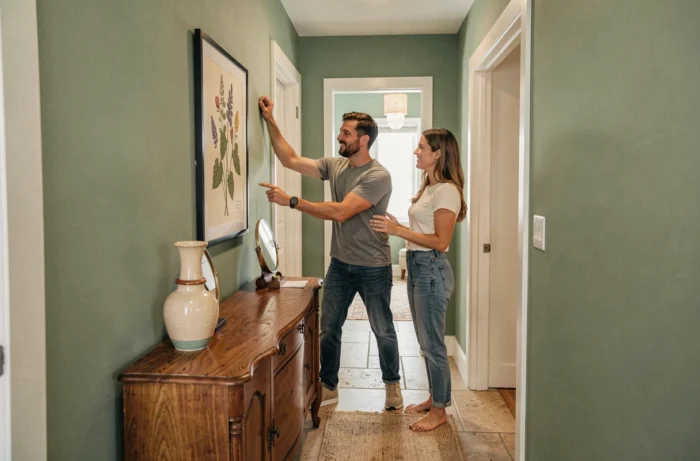
Ultimately, arranging and decorating your home relies on a logical sequence: clearing pathways, correcting lighting, choosing a coherent color direction, and then selecting furniture that serves double duty. Each step prepares the next, and jumping straight to decoration without addressing circulation or lighting almost always leads to a result that doesn’t last over time.