A button lock and a key lock share the same bolt, the same casing, and often the same cylinder. The difference lies on the inside, in the locking mechanism. This mechanical detail radically changes everyday error scenarios, much more than the level of resistance to break-ins.
Everyday Usage Errors: Button vs. Key on the Inside
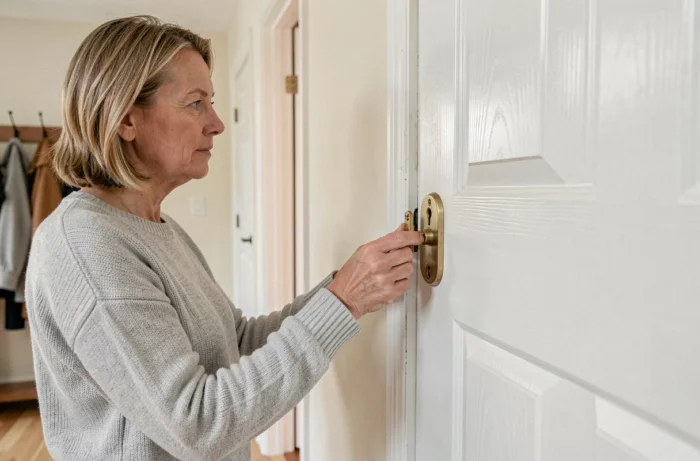
The button lock is operated by rotating a knurled button on the inside, without a key. Locking is quick, intuitive, and does not depend on any keyring. In return, anyone present in the home can open it from the inside, including a child or an unauthorized person.
The key lock (double entry) requires a key on both sides. Locking from the inside becomes a deliberate action, impossible without the key in hand. We observe that this mechanism reduces the risk of accidental opening but creates another problem: the key forgotten on the entrance furniture, or worse, absent during an urgent evacuation.
The choice between these two mechanisms depends on the type of lock with key suitable for your configuration, but also on the profile of the occupants and the frequency of use of the concerned door.
Slamming Door and Forgotten Key
A button lock never locks accidentally when slamming the door: the deadbolt remains in the open position as long as no one operates the button. Forgetting the key inside does not lock you out, since the inside mechanism does not require it.
With a double entry lock, the situation is different. If you lock it when leaving and lose your key, no inside mechanism can help you. This classic scenario generates the majority of locksmith interventions for this type of equipment.
Lock on Glass Door: The Button Becomes a Risk
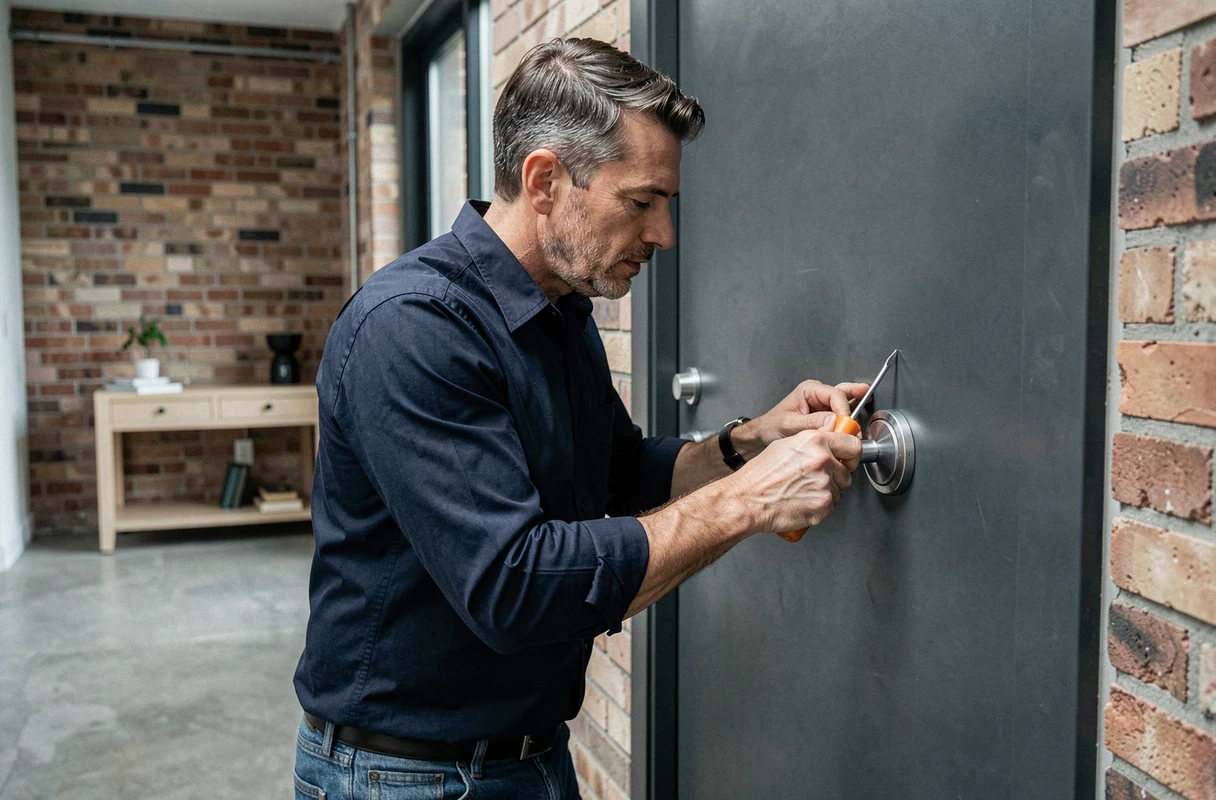
On a door with glazing (veranda door, glazed service door, French door), the button lock presents an obvious vulnerability. An intruder who breaks the glazing can reach through and turn the button. Unlocking takes two seconds, with no tools, no skills.
We systematically recommend a double entry lock on any door where the glazing is less than one meter from the casing. The cylinder on the inside requires possession of a key, even after glass breakage. This constraint neutralizes the most common break-in scenario on glazed doors.
Compatibility with Door Thickness and Cylinder Length
The physical configuration of the door also influences the choice. A button lock only needs a cylinder on the outside. The length of the cylinder depends solely on the thickness of the door and the projection of the casing.
A double entry lock incorporates two cylinders or a through cylinder. It is essential to measure the total thickness (door plus casing on both sides) precisely to avoid excessive cylinder protrusion, which weakens resistance to pulling out. Older doors with non-standard thicknesses regularly pose this problem.
- Standard door (40 mm): most lock cylinders fit without adaptation.
- Thick door (50 mm and more, wooden garage door, old landing door): check the total measurement before purchase, a cylinder that is too short will not engage in the strike plate.
- Thin PVC or aluminum door: drilling for a surface-mounted lock requires precise positioning to avoid weakening the hollow profile of the frame.
Button Lock and Cylinder: The Most Common Compromise
The hybrid model, known as “button lock and cylinder,” combines a cylinder on the outside and a button on the inside. It represents the most common choice in addition to a front door lock. The logic is simple: the main lock manages external security, while the lock adds a quick locking point from the inside.
This compromise only works if the door does not have accessible glazing. As soon as a glazed panel allows access to the button, the security benefit of the lock disappears.
When the Double Cylinder Becomes Necessary Despite the Constraint
Three situations justify giving up the comfort of the button:
- Glazed or semi-glazed door, regardless of the type of glazing (single, double, non-classified laminated anti-burglary).
- Area accessible to unauthorized persons (technical room, storage, sensitive storage area).
- Service door leading outside without a multi-point lock, where the lock is the only locking point.
- Shared housing or seasonal rental where internal access control must remain managed by the manager.
In these cases, the daily inconvenience related to the interior key is an acceptable cost compared to the concrete risk of uncontrolled opening.
Lock Cylinder: Key Profile and Resistance to Burglary
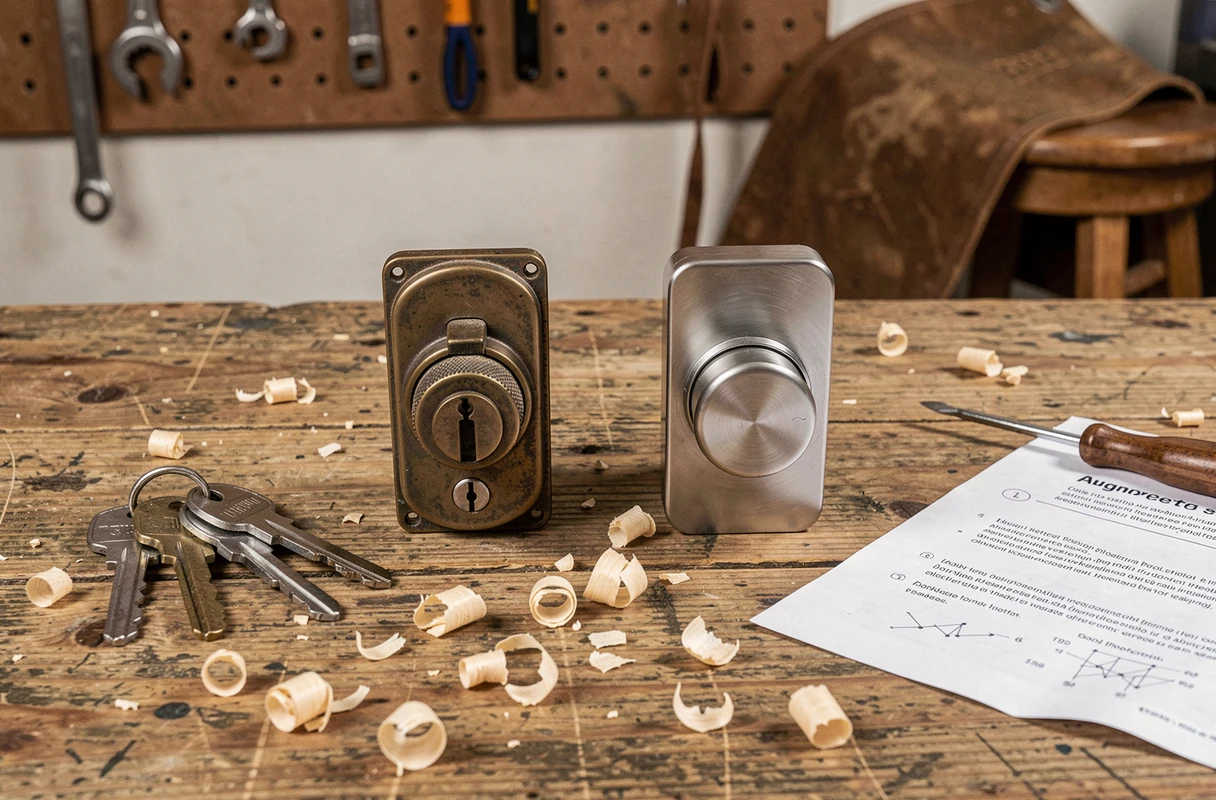
Whether the lock is a button or double entry, the exterior cylinder remains the critical link. A standard pin cylinder offers limited resistance to picking. European profile cylinders, compatible with most surface-mounted locks on the market, allow for upgrading without changing the casing.
A certified A2P lock combines a reinforced casing with a cylinder resistant to destructive opening techniques (drilling, pulling out). This certification, issued by the CNPP, classifies locks into three levels of increasing resistance. For a front door, the first level already provides a significant deterrent.
The type of key (flat, pump, reversible) depends on the chosen cylinder, not on the button or double entry mechanism. We recommend prioritizing a patented key cylinder if unauthorized key duplication poses a risk, particularly in co-ownership or rental situations.
The choice between button and double entry is not merely a matter of comfort preference. It stems from a concrete analysis: who uses the door, what glazing it has, what level of control you expect on the inside. Framing the question this way avoids specification errors that we regularly observe on new installations.