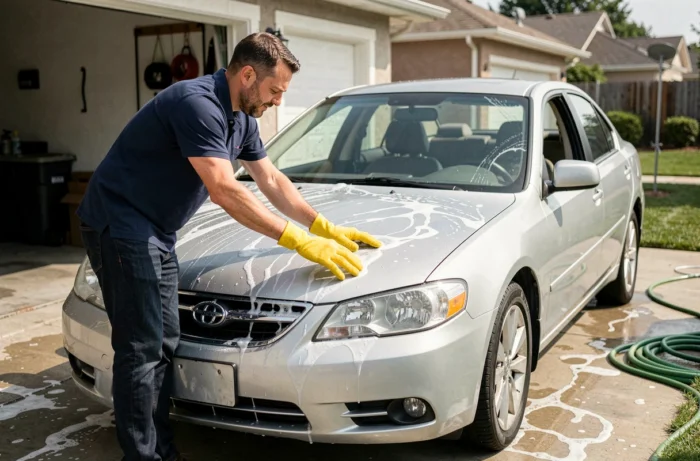
The maintenance of a car is not limited to the annual check-up at the garage. A significant part of a vehicle’s longevity depends on regular, sometimes weekly, actions that preserve both the mechanics and the exterior appearance. Maintaining and enhancing your car on a daily basis relies on a few specific technical principles, often poorly applied.
Undercarriage and Hidden Areas: Maintenance Most Neglect
Car maintenance guides almost always focus on the visible bodywork, fluid levels, and the interior. The undercarriage remains a blind spot in the routine of most drivers.
In winter, road salt and chemical residues accumulate under the vehicle. These corrosive deposits attack unprotected metal components: brake lines, exhaust, engine cradle. Regular washing of the undercarriage measurably limits this corrosion over several years.
High-pressure car washes generally offer a dedicated option. The frequency to remember: after each prolonged salting episode, and at least once at the end of winter to eliminate accumulated residues. A rinse with clear water is sufficient, without specific products.
On labelleauto.fr, vehicle sheets allow you to assess the general condition of a car before purchase, which also includes signs of undercarriage corrosion often indicative of neglected maintenance.
Car Washing: The Two-Bucket Method to Avoid Scratches
Scrubbing your bodywork with a regular sponge and a single bucket of soapy water is the surest way to create micro-scratches. Dirt particles trapped in the sponge act as an abrasive with every pass.
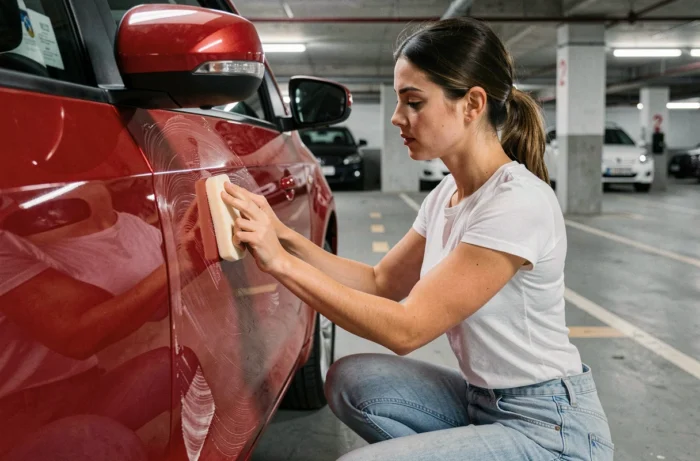
The two-bucket washing method is the standard used in professional detailing. The principle is simple:
- The first bucket contains water with a neutral pH car shampoo, in which the microfiber wash mitt is dipped.
- The second bucket, filled with clear water, is used to rinse the mitt after each pass on a body panel, to remove particles.
- Work panel by panel (hood, fender, door), from top to bottom, as the lower part collects the most abrasive dirt.
The choice of mitt is as important as the method. A long-fiber microfiber mitt traps particles instead of dragging them across the paint. Flat sponges, even of good quality, offer less security in this regard.
Another often overlooked detail: washing your car in full sunlight speeds up the drying of the shampoo, leaving streaks and reducing cleaning effectiveness. Favoring a shaded location or late afternoon hours radically changes the result.
Paint Protection After Cleaning: Wax, Ceramic, or PPF Film
Cleaning a bodywork without protecting it afterward is like stripping a floor without varnishing it. Protection after washing is what distinguishes basic maintenance from lasting care.
There are three main options, with very different longevity:
- Carnauba wax offers a shiny and warm finish, but its durability is limited to a few weeks. It is suitable for regular maintenance without heavy investment.
- Ceramic treatment creates a semi-permanent hydrophobic layer that lasts several months. It requires careful application on a decontaminated surface, ideally after using a clay bar.
- PPF (Paint Protection Film) is a transparent film that absorbs impacts from gravel and light scratches. Its cost is higher, but it protects exposed areas (bumpers, hoods, front fenders) for several years.
For daily use, the most accessible combination remains a gentle wash followed by a wax applied once a month. Drivers seeking a more durable result tend to opt for a ceramic treatment applied by a detailing professional.
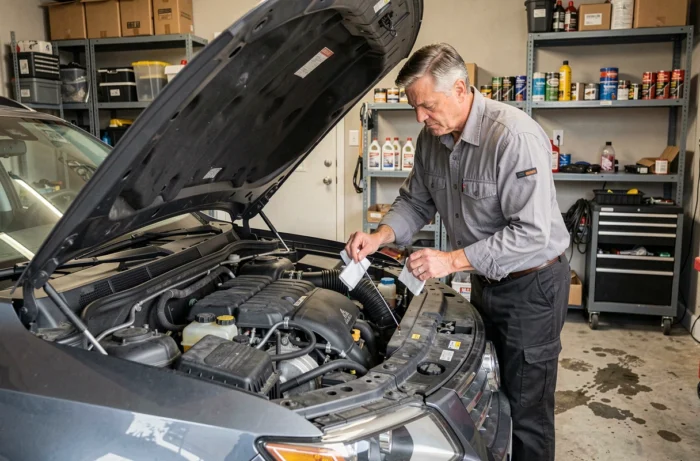
Little Used Vehicle: A Specific Maintenance Routine
Urban drivers or owners of a second vehicle often fall into the opposite trap: the less you drive, the less you maintain. The mechanical consequences of underuse are, however, real.
An engine that only runs on short city trips does not reach its optimal operating temperature. Moisture accumulates in the exhaust, injectors get clogged, and the battery gradually discharges. A weekly trip of about thirty minutes at sustained speed helps limit these effects, particularly on diesel engines more sensitive to clogging.
Aesthetically, a car parked outside for a long time accumulates bird droppings, resin, and acidic dust that attack the clear coat. A quick rinse before these contaminants dry prevents difficult-to-correct damage later.
Drying the Vehicle: A Step Often Rushed
Letting your car air dry after a wash causes hard water spots on the paint and windows. These mineral deposits, if they set in, require polishing to be removed.
Drying should be done with a large drying microfiber, by patting rather than rubbing. This action reduces the risk of micro-scratches while effectively absorbing residual water. The door seals and mirrors, where water stagnates, deserve special attention as they release drips onto the clean bodywork with the first drive.
Regular maintenance of a vehicle relies more on the quality of actions than on their frequency. A car washed properly once a month, with careful drying and appropriate protection, will retain its shine much longer than a vehicle that goes through the rollers of an automatic wash every week.