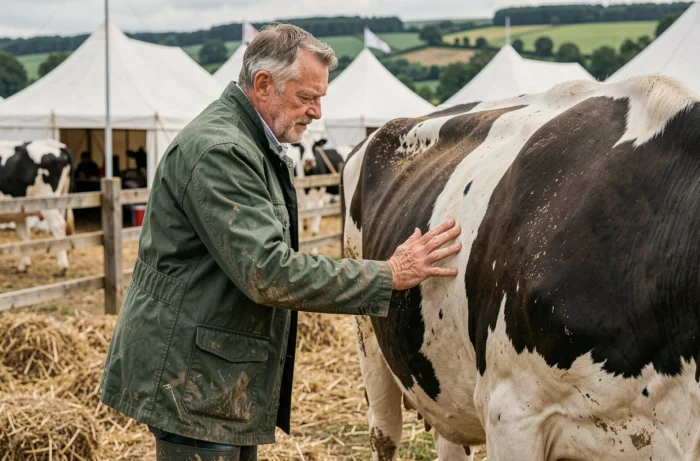
In Belgium, agricultural and horticultural competitions are no longer limited to the visual presentation of an animal or a plant. Scoring grids have evolved, juries are becoming more professional, and technical criteria now weigh as much as aesthetics. Participating in an agricultural competition in Belgium requires understanding these new demands to adapt one’s preparation well in advance of the big day.
Judging Criteria at Belgian Cattle Competitions: Conformation vs. Performance
The recent trend in Belgian cattle competitions, particularly for the Belgian Blue, changes the game for candidate breeders. Scoring is based on five technical indicators of the herd: number of pregnancies-calvings, age at first calving, interval between calvings, live weight on the day of the competition, and price of the cow on the day of the competition.
These criteria go far beyond the simple appearance of the animal in the ring. A breeder preparing for a competition must now work on their breeding strategy over several months, or even years.
| Criterion | Goal for the competition | Impact on preparation |
|---|---|---|
| Conformation (aesthetic) | Body morphology, condition, grooming | Targeted feeding, grooming, presentation training |
| Number of pregnancies-calvings | Reproductive regularity of the herd | Rigorous veterinary follow-up and breeding calendar |
| Age at first calving | Early maturity of the heifer | Genetic selection in advance, adapted breeding management |
| Interval between calvings | Reproductive efficiency | Postpartum nutritional management, heat detection |
| Live weight on the day of the competition | Compliance with breed standards | Adjusted feeding plan in the weeks leading up to the event |
| Price of the cow on the day of the competition | Economic valuation | Choosing the animal based on its actual commercial potential |
This table highlights a fundamental point: optimizing conformation and reproductive performance simultaneously is key. A breeder who selects their animals solely based on appearance risks losing points on zootechnical indicators.
The schedule of regional and national competitions can be consulted at https://www.concoursagrinature.be/, which brings together the various sectors and their events across Belgium.
Professionalization of Juries: What It Means for Candidates
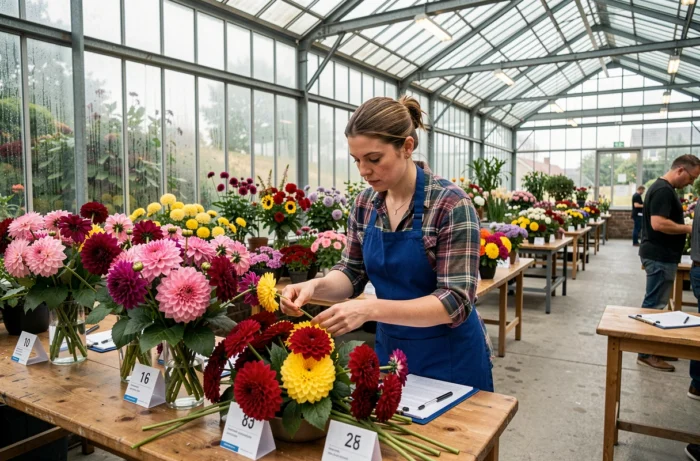
At the Belgian Blue competition in Libramont, jury members underwent two days of specific training before being selected. Three individual judges, from different regions, ultimately officiated in the ring after their judging skills were evaluated.
This professionalization has a direct consequence for participants. Trained judges more easily spot flaws masked by cosmetic preparation. A carefully groomed cow but with too long a calving interval will no longer slip through the cracks.
For breeders, this means documenting their animals’ performances accurately. Breeding records, weight data, and veterinary certificates become preparation tools just like the brush and halter.
Preparing a Solid Technical File
Most competitions require a registration file that includes zootechnical data. Here are some elements to systematically gather:
- The pedigree sheets and complete health record of each presented animal, including vaccination and antiparasitic treatment dates
- Regular weight records from the last few months, to demonstrate a growth curve consistent with breed standards
- Reproductive data (insemination dates, pregnancy results, intervals between calvings) extracted from herd management software
- The Sanitel number of the farm and valid transport certificates for moving to the competition site
Horticultural Competitions in Belgium: Varied Formats and Specific Requirements
Belgian horticultural competitions cover a wide spectrum, from events like Hortifolies in Gembloux (which honors Walloon horticulture) to photo contests organized by organizations like FUGEA for those under 30. These very different formats share a common point: each competition applies its own criteria, published in a regulation that should be read in full.
For competitions of plant products or floral arrangements, the evaluation grid generally focuses on visual quality, freshness, varietal conformity, and traceability of production. In contrast, innovation competitions (like Agri-Innovation, which opens registrations every year) value the innovative nature of the project, its economic feasibility, and its environmental impact.
Adapting Strategy to the Type of Competition
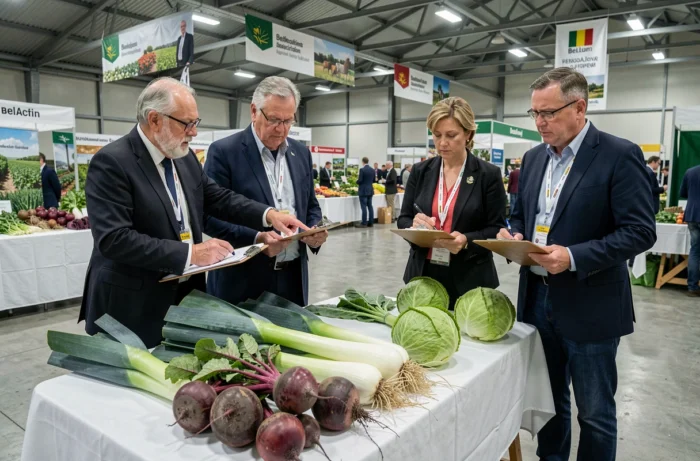
A vegetable producer presenting vegetables at a regional competition does not prepare in the same way as a horticulturist submitting a landscaping project. The former works on the cultural calendar to ensure their products reach peak maturity on the big day. The latter compiles a technical file with plans, planting sheets, and budget estimates.
In both cases, careful reading of the regulations avoids eligibility errors. Some competitions require registration several months before the event, along with specific supporting documents (local production certificate, organic certification if applicable).
Belgian Agricultural Fairs: Turning a Visit into a Competition Opportunity
Major fairs like Libramont or Battice are not just commercial showcases. They host integrated competitions where young breeders present their animals for the first time. At the Battice Fair, programs allow young breeders to meet their heifer and familiarize themselves with the ring in a supervised setting.
For a farmer who has never participated in a competition, these events provide the best learning ground. Observing presentations, exchanging with judges after judging, and analyzing published rankings allows one to calibrate their own preparation for the following year.
- Attend competitions as a visitor at least one season before registering, to understand the process and expected level
- Participate in training days offered by provincial centers (like CPFAR in the province of Liège) to acquire skills in animal presentation or cultural techniques
- Join a producer organization or agricultural union that supports its members in preparing for competitions
Participation in agricultural and horticultural competitions in Belgium relies on preparation that begins well before the event day. Technical scoring grids, the professionalization of juries, and the diversity of formats impose a methodical approach. A complete file, documented zootechnical performances, and a precise understanding of the regulations of each competition make the difference between participation and ranking.