Streetwear in 2026 no longer resembles what it was two years ago. After several seasons where oversized silhouettes dominated without contest, market data signals a shift: fitted pieces are returning to collections, bold colors are gaining ground over neutral monochrome, and European textile regulations are starting to influence brand choices. Measuring these evolutions allows us to distinguish sustainable trends from fleeting fashion effects.
Fitted Pieces vs. Oversized Volumes: What Market Signals Show in 2026
For five years, streetwear pushed volumes toward XXL. Boxy t-shirts, wide-leg cargos, hoodies falling below the hips: the urban silhouette was built around amplitude. This cycle is now closing.
A report relayed by Clothingproducer indicates that analysts (Edited, cited by Vogue Business) project a double-digit increase in fitted tops and blouses for spring-summer 2026. Body-hugging tanks, fitted t-shirts, structured jackets, and slim pants are reappearing in the lookbooks of brands that, a year earlier, swore only by the XXL fit.
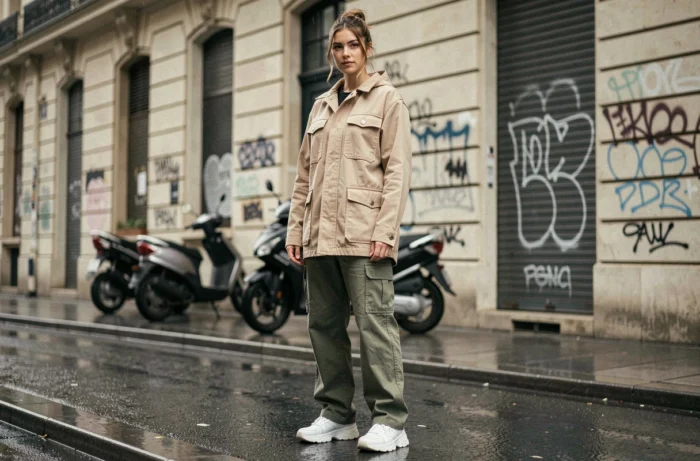
Specialty retailers like Urban Fashion reflect this evolution in their selections, where tailored cuts now sit alongside loose pieces. The winning mix in 2026 consists of pairing a “second skin” piece (fitted top, structured tank) with a wide bottom or cargo pants. This contrast of proportions replaces the total oversized look that recently dominated.
| Criteria | Oversize (2022-2025) | Fitted / Mixed (2026) |
|---|---|---|
| Typical Silhouette | Loose volume from head to toe | Fitted top, wide bottom (or vice versa) |
| Key Pieces | XXL hoodie, wide-leg cargo, boxy tee | Tank top, body-hugging tee, structured jacket |
| Market Signal | Plateau then decline in searches | Projected double-digit increase (Edited / Vogue Business) |
| Stylistic Logic | Uniformity of volumes | High/low contrast, play of proportions |
Statement Colors in Streetwear: Red and Yellow Disrupt Monochrome
Streetwear remains associated with black, gray, and beige. These shades still dominate urban wardrobes, but trend data shows a shift towards bolder colors.
Trendalytics notes in August 2026 a significant increase in searches for red denim and red accents in urban fashion categories. Yellow and orange are also progressing in spring-summer collections, driven by brands looking to differentiate themselves in a market saturated with neutrals.
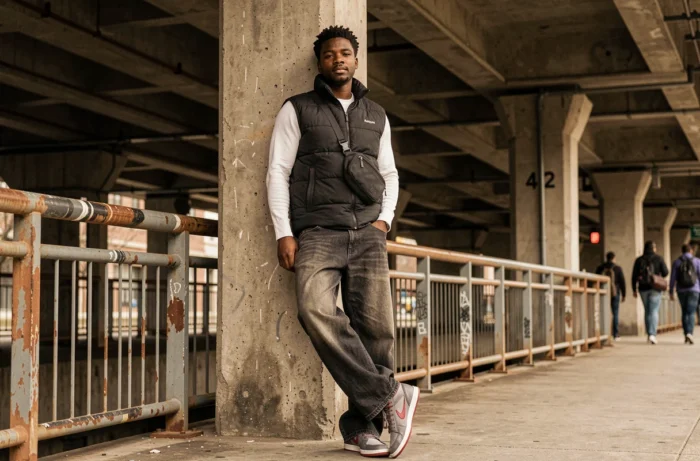
This shift does not mean the disappearance of monochrome. It modifies the grammar of streetwear: an outfit built on a dark base now incorporates a strong colored piece (red jacket, yellow sneakers, saturated accessory) as a focal point. Color becomes a contrasting element, not an overarching theme.
Building an Urban Look with a Colorful Piece
- Choose a single statement piece (jacket, pair of sneakers, or bag) in a bright color, keeping the rest of the outfit in neutral or dark tones.
- Avoid multiplying strong colors in the same look: two saturated accents compete visually and dilute the effect.
- Favor shades that are trending in search data (red, yellow, orange) rather than niche colors, to remain legible within current streetwear codes.
European Textile Regulation and Urban Fashion: A Factor Ignored by Streetwear Guides
Most articles on streetwear trends focus on cuts and colors. No competitor in the top results addresses the impact of European regulations on urban fashion. Yet, this is a factor that will change the available supply.
The European Union adopted in 2024 a revision of the framework directive on waste that incorporates a system of extended producer responsibility (EPR) for textiles. France, already a pioneer with Refashion, sees this framework strengthen. Streetwear brands, including independent labels, must integrate the end-of-life costs of their products.
At the same time, the ban on the destruction of unsold textiles, enacted at the European level, pushes brands to produce volumes more aligned with demand. For consumers, this translates into more limited collections, more targeted drops, and, in some cases, higher prices for streetwear pieces produced in Europe.
What This Changes for the Urban Wardrobe
Brands that produce in small batches gain a structural advantage in this new framework. Streetwear labels accustomed to limited drops (a few hundred pieces per reference) are already aligned with the anti-overproduction logic. In contrast, fast-fashion brands that replicate streetwear codes on a large scale face increasing regulatory costs.
Denim, a central piece of urban style, is particularly affected. Its production generates water and chemical consumption that the new traceability standards make visible. A streetwear jean produced according to the 2026 European standards costs more than it did three years ago, but its composition and manufacturing conditions are now documented.
Sneakers and Collaborations in 2026: A Tightening Market
Collaborations between brands and artists remain a driving force in streetwear, but the model is evolving. Massive drops of limited sneakers, which generated lines and fueled resale, are giving way to more targeted partnerships.
The resale market for streetwear sneakers shows signs of saturation. Pairs that resold for several times their retail price two years ago sometimes struggle to exceed their purchase value. Collectors are becoming more selective, and brands are adjusting their strategies accordingly.
- Collaborations with local artists or emerging designers are gradually replacing partnerships with global celebrities, anchoring streetwear in identifiable regional scenes.
- Recycled or bio-sourced materials are appearing in collaboration sneakers, responding to EPR textile requirements.
- Production quantities are decreasing, which reduces the volume available in the secondary market and refocuses purchases on actual wear rather than speculation.
Streetwear in 2026 is viewed through three simultaneous lenses: proportions (the return of fitted against oversized), palette (statement colors on a neutral background), and regulatory framework (more constrained, traceable production). These three parameters together redefine what a stylish urban look means, far beyond just the choice of a brand or a model of sneakers.