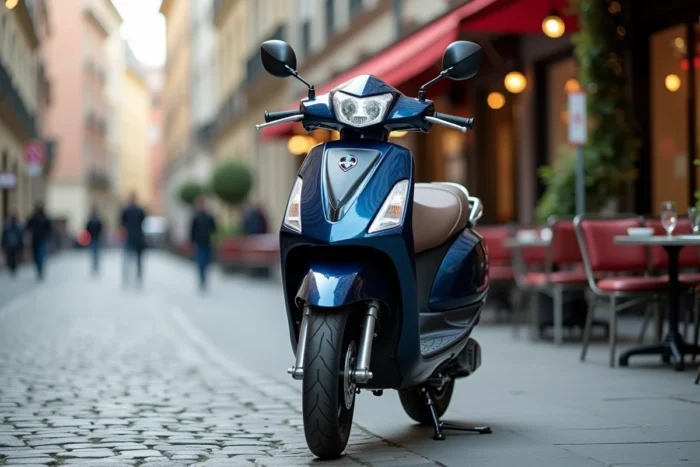
A scooter without a license refers to a moped approved in the L1e category, limited to 45 km/h and 4 kW of maximum power. This dual limit set by French regulations determines everything: the type of engine, the driving profile, and administrative obligations. Understanding this technical framework allows one to distinguish models that truly exploit this ceiling from those that deviate from it.
De-restriction and reclassification: the legal trap of the scooter without a license
The moped category is based on a strict threshold. A vehicle that exceeds 45 km/h or 4 kW automatically falls out of the “without a license” framework and shifts into a higher category, requiring an A1 or A2 license, different insurance, and increased obligations.
Some electric models offer several driving modes. The restricted mode complies with the legal limit, but a “sport” or “road” mode can push the speed well beyond. Riding in de-restricted mode on public roads constitutes an offense, even if the manufacturer delivers the vehicle with this option activated.
The risk is not limited to fines. In the event of an accident, the insurer may refuse any compensation if the vehicle was not in its approved configuration. The reclassification of the moped to a light motorcycle also results in a lack of a license, subject to criminal penalties. Before purchasing a model whose technical specifications mention a speed exceeding 45 km/h, it is essential to verify that the delivered version is strictly restricted and L1e approved.
To identify the most powerful scooter without a license while respecting the legal framework, the comparison should focus on engine torque and low-speed responsiveness, not on a theoretical top speed.
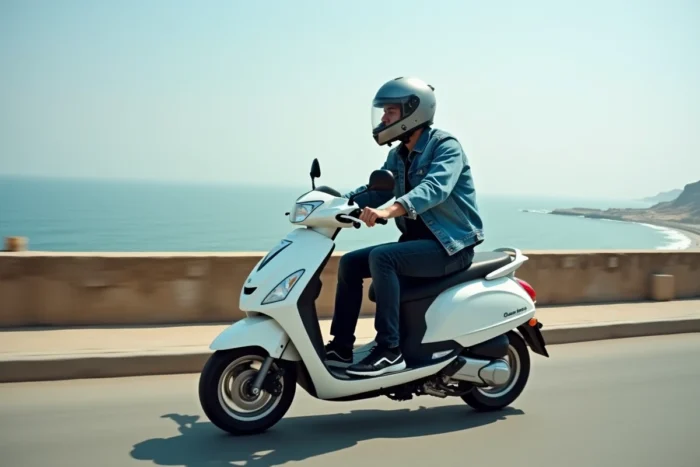
Engine torque and acceleration: what defines the real power of a 50cc electric scooter
With a ceiling of 4 kW identical for all models, nominal power alone is not enough to differentiate scooters without a license. The real difference lies in the engine torque, expressed in newton-meters (Nm).
A high torque from the first turns allows for quick starts at traffic lights and better hill performance. Electric motors have a structural advantage in this regard: they deliver their maximum torque right from the start, whereas a 50cc combustion engine must rev up.
Combustion or electric: two philosophies of power
A 50cc combustion scooter reaches its usable power within a narrow rev range. Urban driving, characterized by frequent restarts, does not always allow it to exploit this peak. The electric motor, on the other hand, offers an immediate response to every throttle request.
The accelerations of an electric scooter without a license are often sharper than those of an equivalent combustion model with the same nominal power. This feeling of responsiveness explains why many urban users consider electric models to be more “powerful,” even if the maximum speed remains the same.
Range and battery: the criteria that differentiate electric models without a license
The perceived power of an electric scooter also depends on battery management. A model whose battery loses voltage after a few kilometers will see its performance drop well before running out of charge.
- The battery capacity, expressed in watt-hours (Wh), determines the distance traveled. Models on the market generally offer between 40 and 100 km of range depending on the installed battery and driving style.
- The removable battery allows for charging at home or at the office without parking the scooter near a socket. This criterion is significant for daily urban use.
- Charging times vary greatly from one model to another. Some manufacturers offer a fast charger as an option, reducing the wait time by half.
A scooter with a removable battery and good capacity remains efficient throughout the journey, without loss of responsiveness at the end of the charge. This point distinguishes well-designed models from entry-level ones.
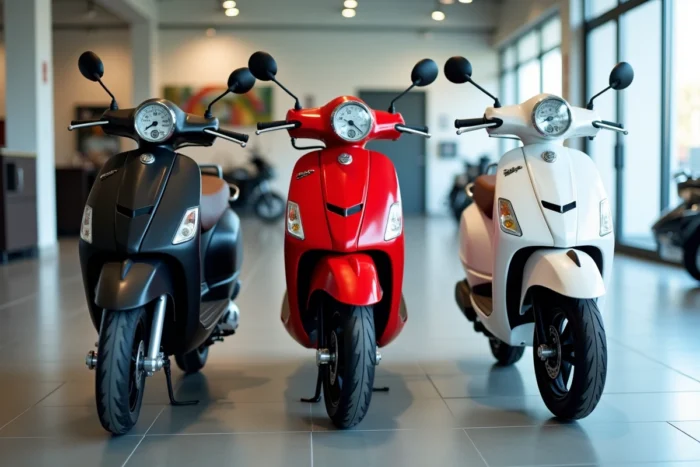
Administrative compliance of the scooter without a license in 2026
The technical specifications do not cover everything. A scooter without a license must meet several administrative obligations to circulate legally, and these requirements now weigh as heavily as performance in choosing a model.
Registration remains mandatory, including for electric models. Liability insurance is required from the first kilometer. Wearing an approved helmet is mandatory for any driver and potential passenger.
AM license and access conditions
Individuals born before January 1, 1988, can ride a scooter without a license without specific training. For others, the AM license (formerly BSR) is available from the age of 14 after a few hours of training at a driving school.
This license covers all L1e category mopeds, whether they are combustion or electric. No regulatory distinction exists between the two types of engines in this regard.
Environmental bonus and purchase price
Purchasing a new electric scooter may benefit from an environmental bonus that significantly reduces the cost. Eligibility conditions and amounts change regularly, which justifies checking the current rates at the time of purchase.
The price of an electric scooter without a license generally remains higher than that of an equivalent combustion model. The cost of use (charging versus gasoline, reduced maintenance) compensates for this gap over time, especially for daily commutes.
Administrative compliance distinguishes a good purchase from a bad one: a high-performing model but poorly approved or uninsured exposes one to penalties and a complete lack of coverage in case of an accident. Checking the certificate of compliance, L1e approval, and registration document before signing remains the most protective reflex.